
Lodger landlords who rent out rooms in their own homes help curb average rents and contribute a sizeable chunk of flatshare supply. But with lodger room supply - and overall rental supply - now in decline, SpareRoom is calling on the Chancellor to follow Ireland's lead, and include updates to the Rent a Room scheme in the Budget.
In the third quarter of 2026, lodger rooms made up 29% of total UK flatshare supply, yet these are now in decline, falling 1.4% year on year. In inner London, lodger rooms make up 17% of total supply and are also falling year on year (-2.9%).
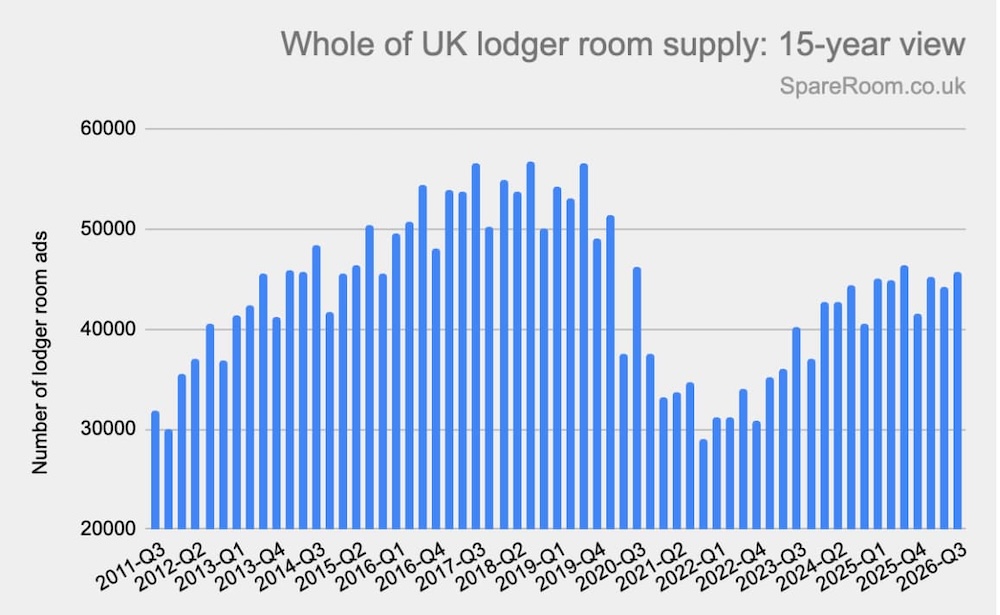
The chart below shows UK lodger room supply over the past 15 years, which peaked in the years after the threshold was last increased (April 2016; announced in 2015) and fell dramatically during the Covid years. Supply has not fully recovered since and, now in decline, a shot in the arm is badly needed, particularly now overall flatshare supply has entered negative growth across the UK.
Ireland has just announced that its annual rent-a-room relief threshold - the amount households can earn tax free from renting rooms to lodgers - will increase from €14,000 to €16,000 next year. In the UK, the tax-free threshold has been stuck at £7,500 per year for a decade.
Lodger landlords don't just earn extra income for themselves. They contribute much-needed rental supply that is, on average, £515 per year cheaper than rooms offered by traditional landlords, so renters win too.
There are an estimated 28 million empty bedrooms in England, Wales and Scotland. While not everyone is in a position to rent these out, freeing up just 5% of those rooms would provide affordable accommodation for 1.4M people1.
Matt Hutchinson, director at flatshare site SpareRoom, comments: “Not a single brick needs to be laid to boost lodger rental supply. Simply increase the threshold, awareness grows, and rooms hit the market. We saw this play out in 2016 and there's no reason it shouldn't work again. Right now you can only earn £625 per month in lodger rent before you have to declare the income, which isn't reflective of rents today. As a result, people are pushed into completing a tax return, which we know from having spoken to plenty of would-be lodger landlords is a significant deterrent. For an incentive to work it needs to keep pace with the times.
“It's also really important to keep this supply in the rental market, where it's so desperately needed. That could be achieved by adding a 31-day minimum stay requirement to the scheme's terms, closing the loophole that allows people offering holiday lets to benefit from this tax relief.”