
- For job-hunting graduates, Nottingham and Exeter have winning combinations of fastest rising entry-level job opportunities and below-average monthly rents.
- But under 25s in the rental market are in steady decline, suggesting entry-level wages aren't keeping pace with the cost of living.
- Graduates hoping to fly the nest after university will need a starting salary of at least £39K to affordably live in London and £33K to rent in Oxford, where entry-level jobs are growing fastest.
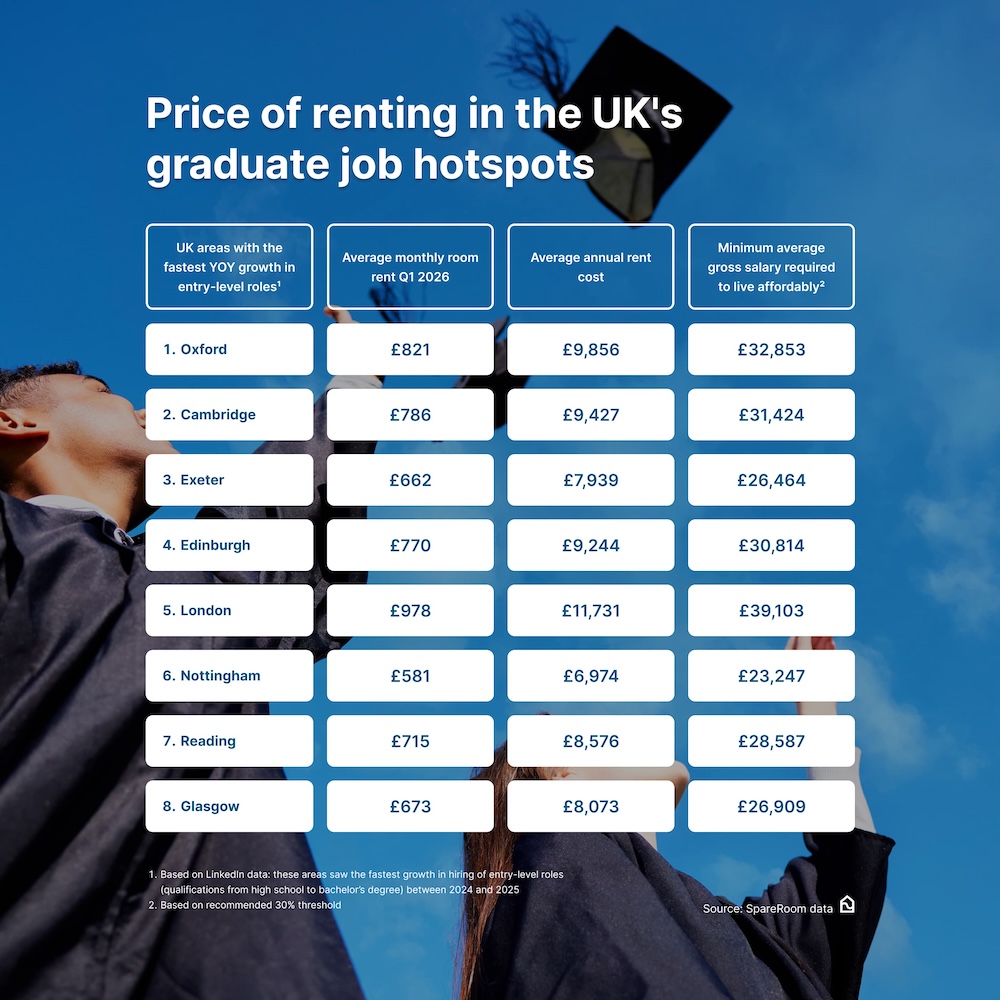
Data analysis from flatshare site SpareRoom has found graduates chasing job opportunities this summer will need a minimum starting salary of £32,853 to afford rent in Oxford, the area of the UK identified by LinkedIn as having the fastest growth in entry-level roles. This is the city with the second highest room rent outside of London, at £821 per month.
London is fifth in LinkedIn's ranking of UK areas with the fastest year-on-year growth in entry-level jobs. But to afford rent in the capital, where an average room costs £978 per month, graduates need to aim for a minimum gross salary of £39,103, based on 30% being the maximum recommended proportion of income spent on housing costs.
Graduates might be better off looking at Exeter, third in the rankings for rising entry-level job growth, and where the average room rent (£662 per month) is below the UK average1. Alternatively, Nottingham is sixth in the country for entry-level job growth and has sub-£600 average room rents (£581 per month).
Under 25s in the rental market have been in steady decline for the past decade. In 2015, this age group made up almost a third (32%) of the flatshare market. In 2025, the share of 18-24 year olds was little more than a quarter (26%). Not being able to access the rental market makes it much harder to chase the limited entry-level job opportunities available.
According to ONS data, the median annual salary for 22-29 year olds in full-time employment is £29,8552, effectively pricing young people out of half of the top eight areas with the fastest year-on-year growth in entry-level roles.
The table below shows the top areas of the UK with the fastest growth in entry-level job roles according to LinkedIn data, alongside data from SpareRoom showing how much it costs to rent an average room in each area, and the minimum salary required if no more than 30% of an individual's gross salary is to be spent on housing costs:
The chart below shows the impact of the pandemic on UK average room rents, which - although now flatlining - are still inflated way above pre-pandemic levels:
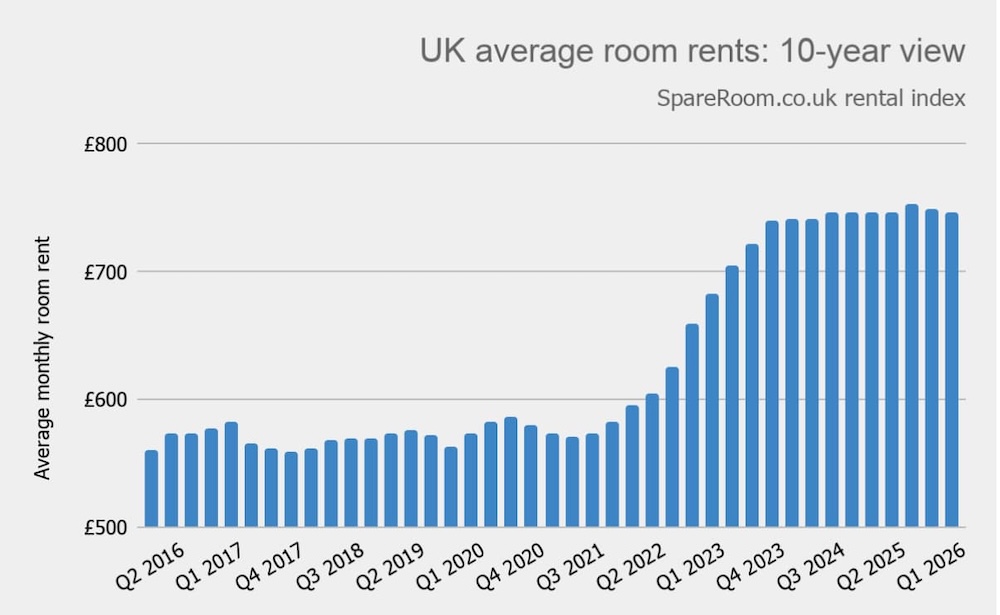
Matt Hutchinson, director of flatshare site SpareRoom, comments: “Graduates chasing job opportunities and looking to relocate may find affordable rooms are scarce, because rents - although no longer rising dramatically - have not seen any meaningful decreases either.
“Under 25s are in steady decline in the rental market because grads today aren't only contending with high rents. Student loan repayments reduce disposable income at a time when the basic cost of living - including energy bills, food and fuel - is sky high, and the loan repayment threshold is due to be frozen from next year, triggering more grads into repayments. So it's little wonder more young people aren't fledging, even if it does limit their career opportunities.
“A healthy economy relies on a fluid workforce so when even flatsharing becomes unaffordable, you know you have big problems. Salaries either have to increase to reflect the higher cost of living, which puts huge pressure on businesses, or the Government has to take action to make housing more affordable for lower-paid workers, which includes those just starting out in their careers.”